Guide
How to measure your child's height at home
Two ways: a pencil and a wall, or your iPhone. Both work for grown-ups too.
1. With a pencil and a wall
- Shoes, hats and hair clips off.
- Stand them on a hard floor, back to a wall, heels together and touching it.
- Head level, looking straight ahead.
- Rest a flat book on their head, square to the wall, and mark under it in pencil.
- Measure from the floor to the mark with a tape measure. Write down the date.
Easiest with two people: one to hold the book, one to keep them still.
2. With your iPhone
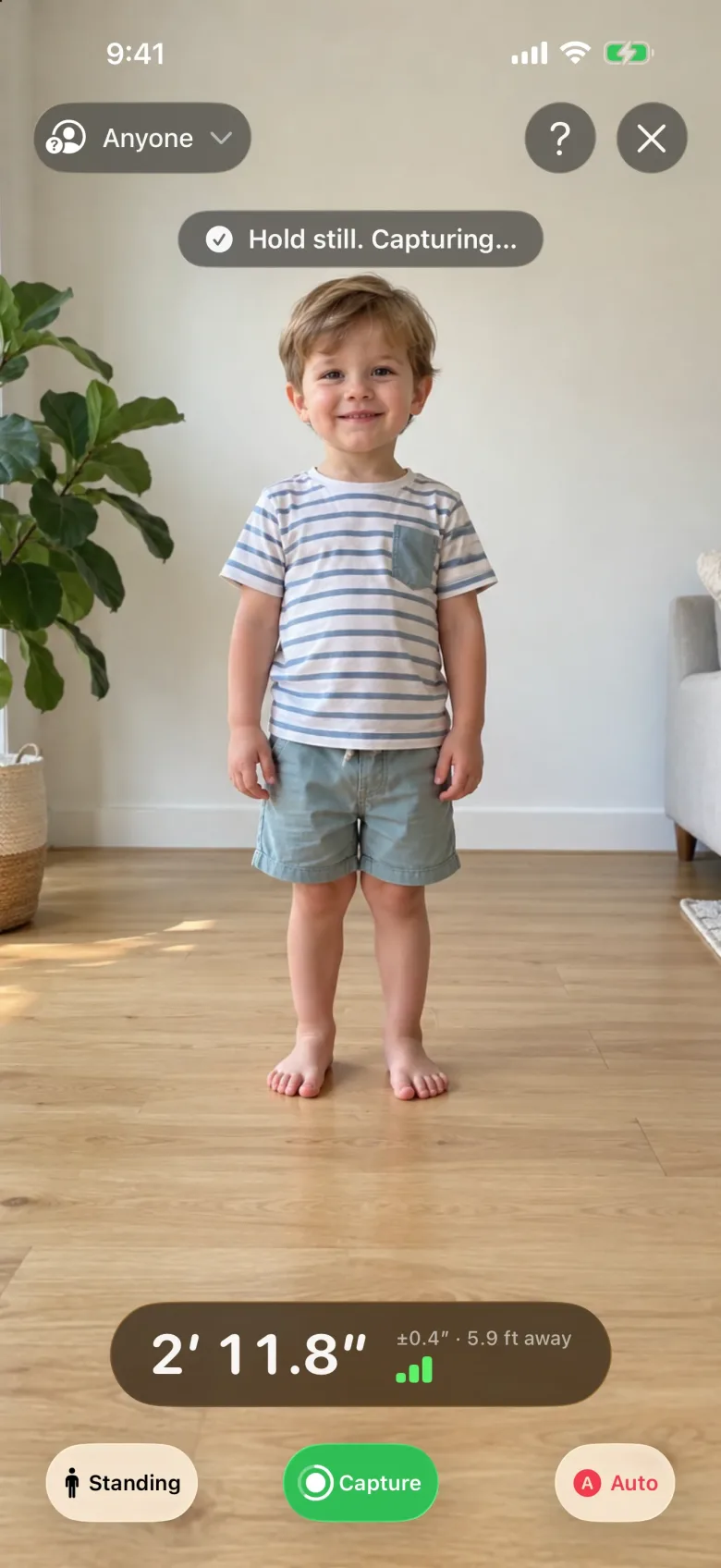
- Shoes off. Stand them on the floor, about 4 to 11 feet from your iPhone.
- Open Measure. Keep their head and feet in view.
- Hold still. Doorframe captures once they stand up straight and its readings agree.
- It asks who it is, and the height goes on their page and the family door.
Every height shows its range, like 2′ 11.8″ ± 0.4″. No pencil on the wall, and no book on their head.
Needs an iPhone with LiDAR: iPhone 12 Pro or a later Pro or Pro Max. On any iPhone, you can type in a height you measured by hand.
Tips
- Toddlers who won't stand still
- Doorframe waits while they sit, squat or kneel, and asks "Were they standing up?" if a height is clearly shorter than last time.
- Babies
- Under two, children are usually measured lying down. In Doorframe, switch to Lying and lay them flat on the floor.
- Same time of day
- People are a little taller in the morning, so measure at about the same time each time.
- How often
- Every few months is plenty for growing kids. Doorframe can remind you every month, 3 months or 6 months.
- Grown-ups and friends
- It measures anyone. Grown-ups get a steady height, the average of their last measurements. Measuring each other for fun works too.
Then watch them grow
Doorframe puts each child's height on a WHO or CDC growth chart with their percentile, and the whole family on one door. More answers.
